
Kanawha Deed Records by Type
Deeds are only the start. The Kanawha County Clerk's land-record page names a much wider set of instruments. Each type answers a different question about a parcel or a transfer. A financing paper may attach to the land without moving ownership at all. A release or an agreement can do the same. So read the instrument name and the parties carefully. An index hit is a lead, not proof of who holds title.
| Instrument | What it does | Common research use |
|---|---|---|
| Deed | Records a conveyance from grantor to grantee | Confirm parties, land description and filing reference |
| Deed of trust | Records security for a loan | Find lender, trustee and encumbrance terms |
| Release | Shows an identified claim or security interest was released | Check whether a recorded deed of trust was later cleared |
| Assignment | Moves an interest or instrument to another party | Follow a lender or trustee change |
| Plat map | Shows recorded lots, blocks, streets or easements | Read a subdivision reference in a deed |
| Trustee report of sale | Records a foreclosure-related sale report | Trace a transfer after foreclosure activity |
| Liens, agreements, affidavits | Record claims or facts affecting land | Check the broader instrument trail |
The list runs further than most people expect. Church trustees, cemetery deeds, affidavits and military discharges all appear alongside ordinary deeds. The Kanawha County Clerk land-record page is the official portal entry point. Its public text names categories only. The Clerk does not confirm that every image can be viewed online.
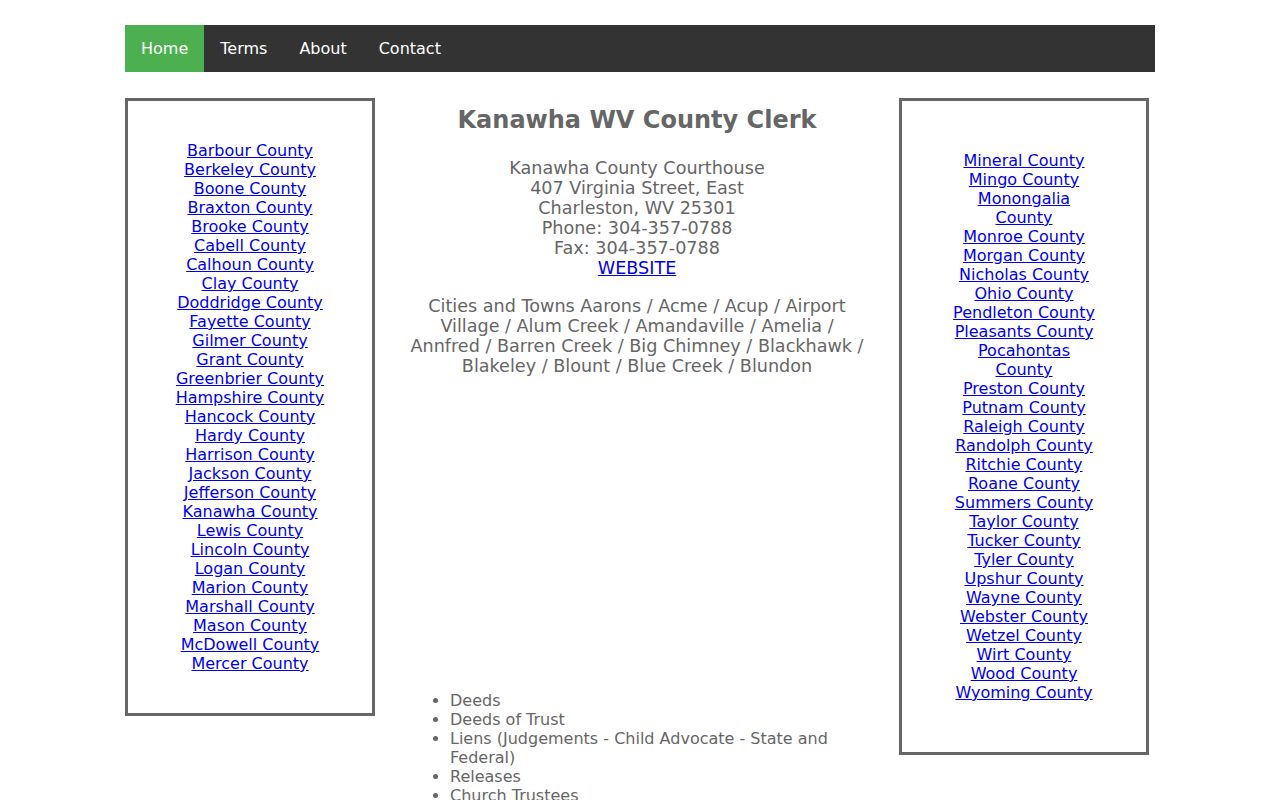
Military discharge records are marked restricted on the Clerk's list. Treat them differently from ordinary deed records. Ask the custodian about access before making a request.
Kanawha Grantor and Grantee Index
Every deed has two sides. The grantor conveys the interest; the grantee receives it. The Clerk's page does not expose its live search form publicly. So portal fields, result caps, year coverage and image rules go unstated. At the record room, ask for an index search under both names. Have the clerk identify the instrument reference before requesting a copy.
For title history, work backward from the current deed. The grantee index can reveal an earlier instrument into the current grantor. That grantor's name becomes your next grantee search. Repeat the chain step by step. A reverse index is arranged by the person conveying land. It helps trace transfers out of an owner instead. Book and page pinpoint the recorded volume. A document number may serve as a separate portal reference.
- Start with the parcel's current card and copy the owner, legal description and deed reference.
- Find the newest deed and note grantor, grantee, date, book/page and land description.
- Search the earlier grantee entry for the current grantor to locate the prior deed.
- Repeat with each earlier grantee, keeping names, dates and legal descriptions aligned.
- Check releases, estate papers, plats and court cases where the chain changes form.
The Kanawha property search steps show how an assessor card supplies the parcel key and deed book/page first. Run that lookup before starting the deed search.
Mortgage Papers and Releases
West Virginia relies heavily on deeds of trust as security instruments. The County Clerk records these alongside assignments and releases. Search by the owner or borrower name, the lender or trustee, and the legal description. A refinanced property often shows a new security instrument. It also shows a release of the older one. Never assume a loan stays open. The original deed of trust may sit in the index for a reason. Do not assume a loan stays open just because the original deed of trust sits in the index.
An assignment can shift loan servicing without touching ownership. Follow the recorded references and check later instruments for a satisfaction or release. A lien may be indexed against a person or company rather than a parcel. A parcel-only search can miss it. Where enforcement or a judgment is involved, use the Circuit Court docket. Then compare the court result against the recorded release or order.
- Grantor
- The person or entity named as giving an interest.
- Grantee
- The person or entity named as receiving that interest.
- Book and page
- A reference to the recorded volume and page holding an instrument.
- Chain of title
- The sequence of recorded transfers and related instruments for land.
Trustee Reports and Foreclosure
Trustee reports of sale appear among the Kanawha land-record categories. These reports matter most when the tax card, deed and court file seem to tell different stories. A foreclosure can leave several fingerprints. Look for a lis pendens, a deed of trust, a court action, a trustee sale report and a later deed. Search both the owner and the lender or trustee. Then check whether a deed actually followed the report.
The statewide Judiciary site offers circuit and magistrate case searches through a dynamic application. Its exact search fields vary. Online docket details can be incomplete. The filing clerk confirms the case. Kanawha Circuit Clerk sits at 111 Court Street in Charleston and answers at (304) 357-0440. Its dockets cover foreclosure, quiet title, partition, lien enforcement and probate disputes involving land.
A trustee report never substitutes for the deed or order that followed it. A tax sale may enter the picture. Then add the Sheriff and Auditor records to the chain. A lien sale and a completed transfer are separate events.
Kanawha Plats and Legal Descriptions
A plat is a recorded plan of land. It can show lots, blocks, streets, dedications and easements. Modern Kanawha deeds often identify a parcel by lot and block, while older instruments rely on metes and bounds, waterways, survey references or adjoining owners. The Clerk's land page lists plat maps as a record category, and Archives finding aids list survey and entry books.
Copy the full legal description from the deed. Include the subdivision name, lot, block and any survey call. The assessor card offers a modern legal description and map ID, and comparing it with the recorded plat usually pins down the reference. The GIS viewer orients you. It does not fix the legal edge. For a disputed boundary or right of way, order the recorded plat or survey and consult a licensed surveyor.
Annexations and renumberings confuse the trail. A modern address can look nothing like an old Kanawha deed. When a street search stalls, search by party name and legal description instead.
How Far Kanawha Deeds Reach
The WVLandRecords landing page names no first online year. Treat any assumed cutoff as a guess. State Archives holdings are more specific. Deeds run from 1757 to 1901 in one Kanawha series and 1790 to 1910 in another, while a deed index spans 1756 to 1969, a grantor index runs 1790 to 1946, and a grantee index reaches 1795 to 1967. Each range belongs to a distinct series, and none guarantees that every volume survives.
The assessor's Land Book Viewer is separate. It advertises assessment books from 1791 to 1962. Those old pages can identify tax ownership or value, but they are not deed images. A statewide preservation project lists Kanawha as in progress, so digitization and courthouse access may keep changing.
For historic deeds, indexes and related series, the State Archives Kanawha finding aid is the documented path. It lists the related series too.
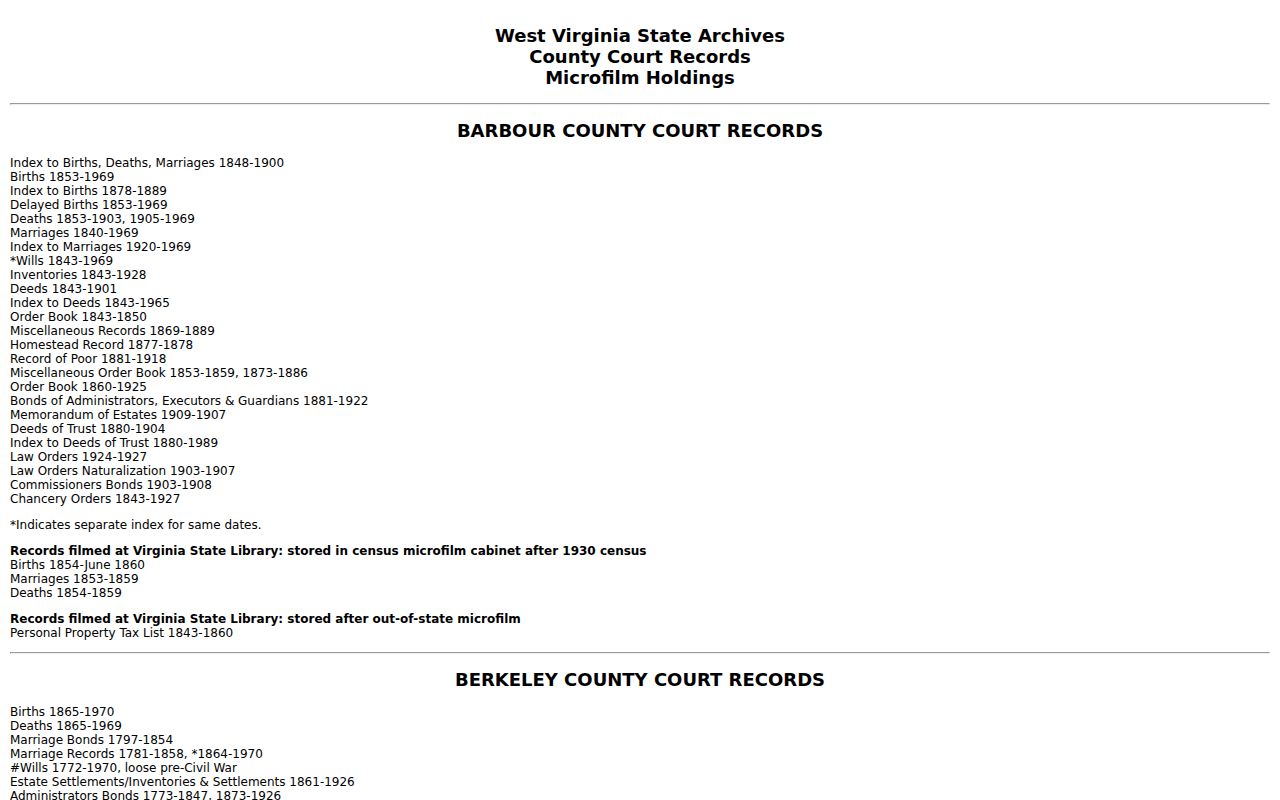
When you write to Archives, name the series, year and index type. Written requests are required. Phone and email requests are not accepted. The Archives research services page lists in-state research at ten units, out-of-state research at twenty, copying charged separately, and all the request details.
Requesting a Kanawha Deed Copy
No fee schedule appears on the public land page. So ask before you travel or mail a check. The County Clerk record room can confirm which copy types exist. It can also say whether a certified copy is possible and the cost. When you call, give the property name, the instrument type, and an approximate recording date. Include a book/page or document number and the legal description too. Bring only an owner name and staff may still help. The grantor and grantee indexes can be searched that way.
Need the numbers? The County Clerk's main line is (304) 357-0130, and the record room is (304) 357-0240. Posted county office hours run 8:00 a.m. to 5:00 p.m. on weekdays. For older material, State Archives may be the better stop. It maintains its own written research and copy process. Any West Virginia FOIA request should name the office that actually holds the file. It should also describe the record with reasonable detail.
A deed index hit identifies a filing reference. It does not prove that the transfer is complete, current or free of other claims. Read the instrument and any later deed, release or court order.
Want a full historical chain of title? The former-owner workflow follows earlier grantees and shows how the Archives indexes fit once the modern records end.
Old Kanawha Records and Context
Early land descriptions reach back before West Virginia statehood. Kanawha survey books span 1788 to 1861. Entry books go back to the late eighteenth century as well. An old tract may be identified by stream, survey, adjoining owner or tract name instead of a street address, which is why an old deed search usually needs a name and district rather than an address.
Polk's Charleston directories begin in 1908 and cover neighboring suburbs. A directory can tie an address to an occupant, employer or household notation. It cannot establish title. Use it for a name or date clue. Confirm ownership in the Clerk record. Obituary, newspaper and probate research can explain a fiduciary deed or heirship affidavit that shifts the chain.
Digitization of Kanawha deed books is ongoing. A missing web result is not the end. Turn instead to an Archives finding aid or a record-room question rather than assuming no earlier instrument exists.