
Kanawha Property Tax Records
The assessment card and the tax ticket are two different records. The Assessor maintains the classification, land and improvement values, and owner and exemption details. The Sheriff Tax Division handles the tax bill, payment, receipts and delinquency. Check the field name first. That tells you what a number means. Compare it with a deed, a plat or a market estimate after that.
| Field or record | What it shows | Where to check |
|---|---|---|
| Owner and mailing address | Name carried on the assessment roll and notice destination | IAS assessment card |
| Land, building and total | Value components recorded for assessment | IAS appraisal/value detail |
| Tax class and land use | Assessment classification and listed use | IAS card and assessor office |
| Exemption indicator | Relief applied to eligible taxable value | Assessor card and current application rules |
| Tax ticket | Current real-estate or personal-property bill | Sheriff Tax Division portal |
| Receipt/payment status | Payment recorded for a ticket | Online portal or Sheriff receipt line |
| Delinquency and lien sale | Past-due tax enforcement status | Sheriff Collection Enforcement and Auditor |
The Kanawha Assessor home page outlines the assessment role, GIS mapping, and homestead relief, and it links into the property search portal. It is not the place to find a complete tax bill. Valuation and roll questions belong with the Assessor. Bill and payment questions belong with the Sheriff.

State law makes the Sheriff the ex officio county treasurer. Match any tax ticket by parcel and year, and remember that a receipt proves payment only. It is not a title document.
West Virginia Assessment Rule
West Virginia Code §11-3-1 sets annual assessment at 60 percent of true and actual value as of July 1. True and actual value follows a voluntary-sale market concept. The assessor's card may therefore show an appraised or market figure alongside the assessed amount. Do not read the assessed number as a listing price, appraisal report or guaranteed sale value.
The state describes a three-year cycle for trained assessor staff to visit every parcel and review physical changes. That cycle supports current valuation, but it does not mean every sale instantly resets the online card. A new building, changed use or physical update may affect the record at a different point than the latest market transaction.
The West Virginia assessment cycle sets out the cycle rule. The next image is a copy of that state source, which helps explain why a tax value can move on a schedule separate from deed recording.
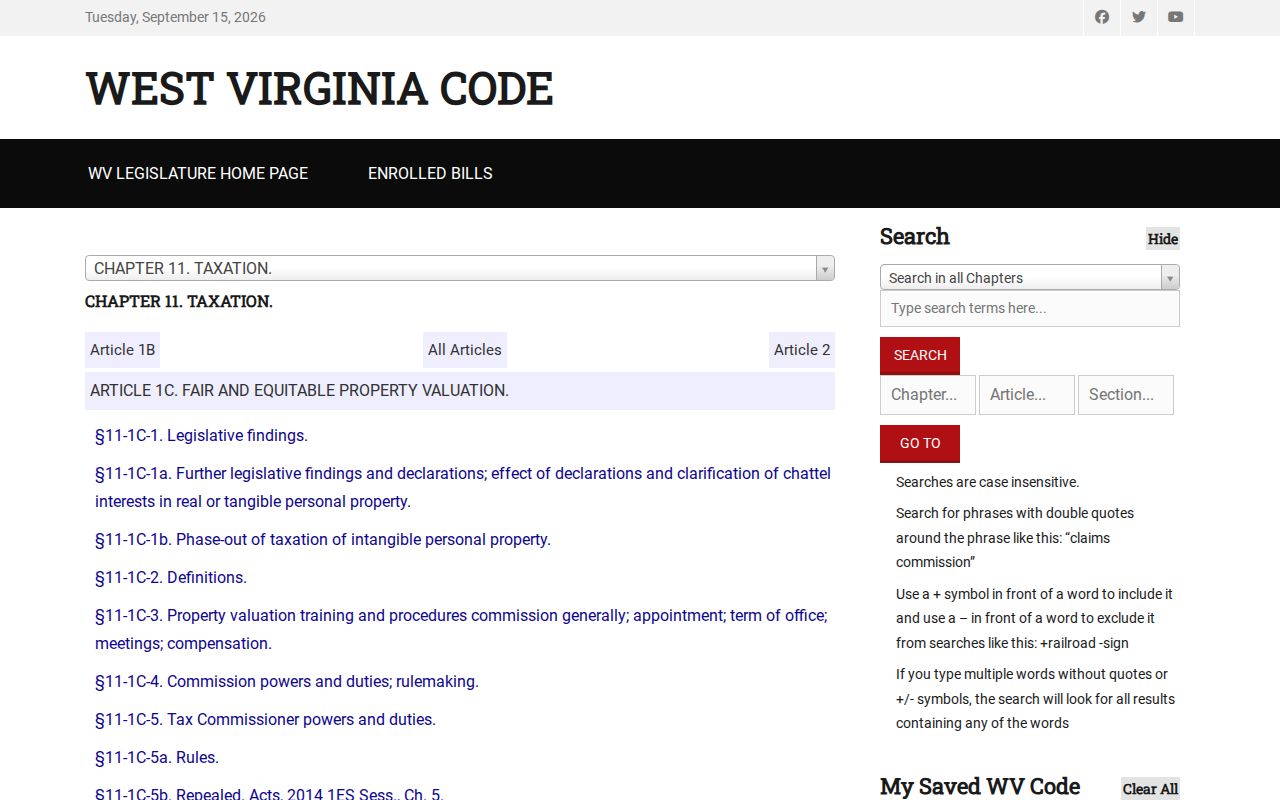
For the legal owner, compare the value card with the newest deed. For the tax due, go to the Sheriff's ticket. Both records can describe the same Kanawha County parcel while carrying different update dates.
Kanawha Exemptions and Relief
The assessor's home page points to homestead relief. The assessment search can also reveal exemption clues. An exemption changes the taxable assessed amount. It does not touch the recorded deed or the market value underneath it. Read the fields on the card carefully. Ask the Assessor which current forms and proof apply. Do not rely on an older application or a secondhand description. Never assume an exemption just because someone lives at the parcel. Do not assume it from a prior tax ticket with a lower amount. The county publishes no complete, current list of exemptions or eligibility conditions. Use the official assessor channel to check filing dates and supporting documents. Also ask whether a claim carries forward. The exact result belongs to the tax year shown on the ticket. If the owner, use, or mailing address changed, check whether the exemption record changed too. An exemption flag is a useful clue. It proves neither ownership nor what the property would sell for.
Look Up a Kanawha Tax Bill
The Sheriff's tax portal lets you view or pay both real-estate and personal-property tax tickets. Start with the parcel or account details the live system requests. Before paying anything, confirm the tax year, taxpayer, parcel, and amount due. If the portal returns a ticket, save the record date. Print or keep the receipt for the transaction.
- Find the parcel ID and owner name on the Assessor card.
- Open the Sheriff Tax Division portal and enter the requested ticket or parcel details.
- Compare the year and property description with the assessment roll.
- Use the portal receipt if payment is made online; retain its account and confirmation data.
- Call the Sheriff receipt line for a non-online receipt question.
Online payments display as paid immediately in the portal. Need a receipt later? Reprint it by entering the email address and account number used at payment. The Sheriff lists electronic check as free, while credit cards carry a 2.4 percent fee with a two-dollar minimum.
Kanawha Payments and Receipts
The Sheriff's tax payment information page explains the online payment and receipt process. Card payments may show a processor fee; e-checks have none. For a payment made another way, call (304) 357-0210.
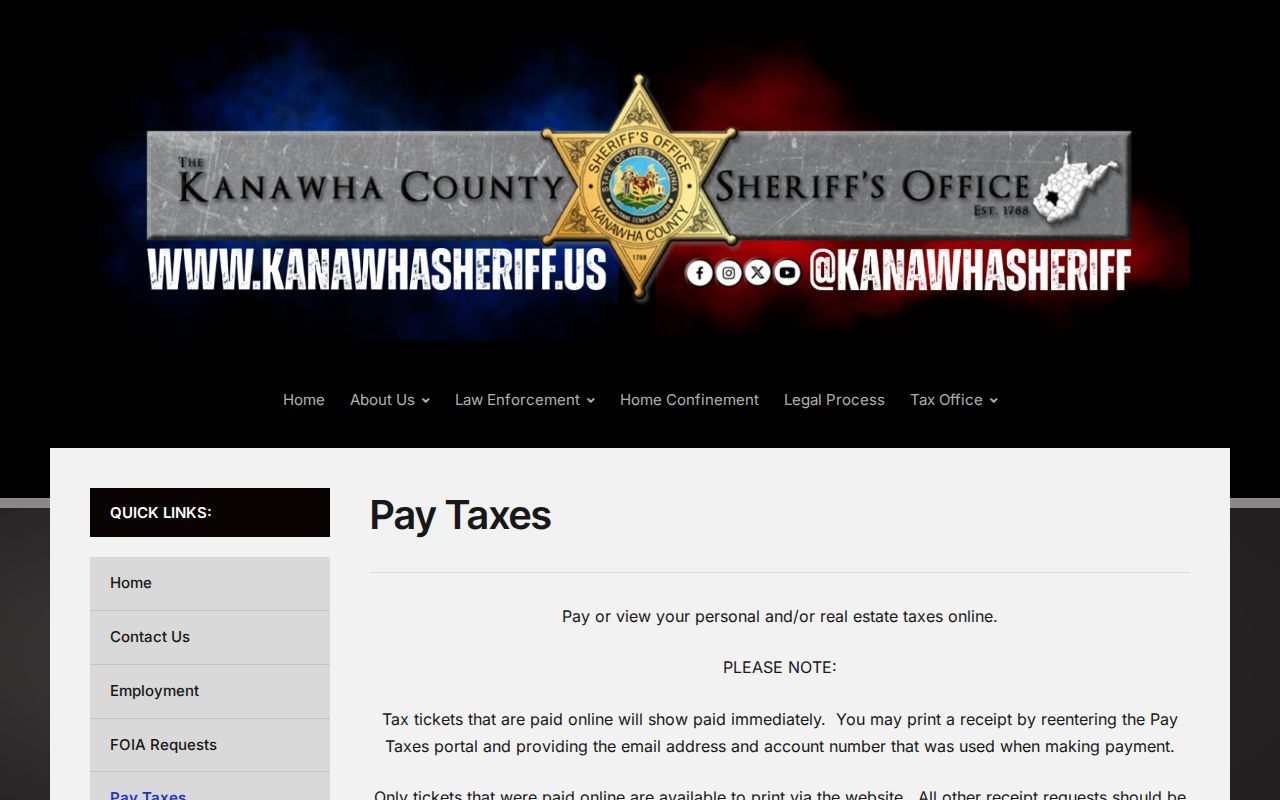
Keep every receipt with the tax year, parcel, payment date, and confirmation number. If an online payment does not display as expected, contact the Sheriff. The county's listed phone number reaches the office. Never trust a payment link or message from an unknown source. The Kanawha County Sheriff Tax Division page handles the current ticket lookup. It is the entry point for that search.
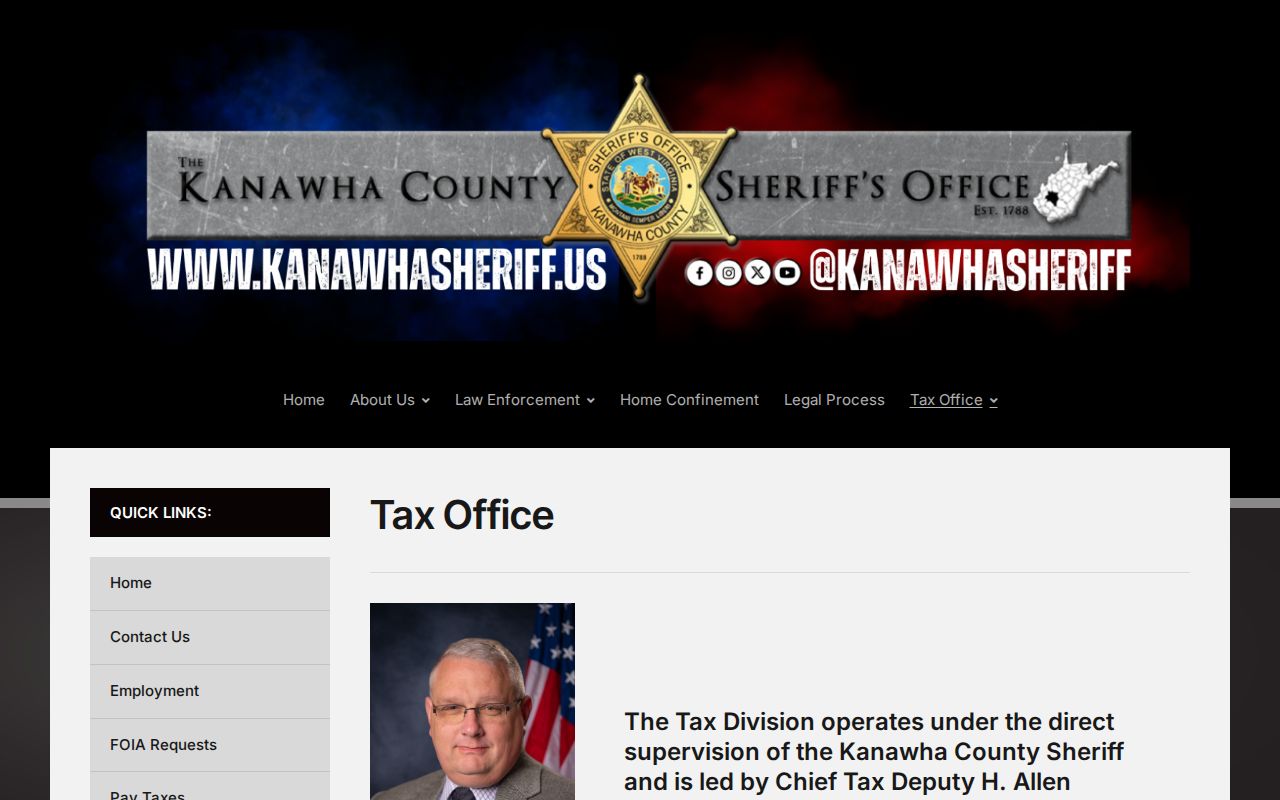
A paid bill settles no deed dispute. The County Clerk holds recorded transfers, while the Sheriff's portal records only tax collection activity in Kanawha County.
Delinquent Kanawha Tax Records
Delinquent taxes in Kanawha County fall to the Sheriff Collection Enforcement unit. That office runs the annual tax-lien sale. It also handles redemptions and bankruptcy claims. The office posts the current sale notice each year. It reports roughly 2,100 liens offered at the November sale. About 100,000 tickets sit on the books at the start of the year. Treat those figures as office-reported scale rather than a fixed count. The current notice governs any given year.
A lien sale is not a finished deed transfer. The sale, the redemption period and the Auditor record all matter. So does any later tax deed or conveyance. West Virginia Code §11A-3-35 requires the Auditor to keep a permanent record of delinquent and nonentered land. It includes a description, the former owner and dates. Weigh that record against the Sheriff, the County Clerk and the GIS parcel before concluding anything.
One wrinkle deserves care. A tax ticket can stay attached to a parcel after the assessment owner field changes. Note the tax year and instrument date so the chronology stays clear.
Reviewing a Kanawha Assessment
Start with the value fields on IAS. Check property class, land use, acreage, building details and the sale range. Confirm the assessment describes the property as it stood on the July 1 date. Note any physical change that could explain a difference. A deed's recorded consideration is a useful comparison point. It does not replace the assessor's analysis.
The Board of Equalization and Equalization process is the formal route for disputes. The Assessor's office can supply the current Kanawha County appeal form, calendar and filing deadline. Contact it promptly for procedures, evidence requirements and the proper board or notice. Never assume an annual date borrowed from another county.
Good evidence helps. Bring the parcel card and recent sale documents. Also bring a clear description of any building or land change. Keep the tax year visible on every comparison. The property value and the tax bill can refer to different assessment periods.
Kanawha Land Books and Tax History
The Land Book Viewer covers 1791 through 1962. It searches by year, book or district, and page. That reach makes it useful for tracing historical tax names. It also covers land values once current IAS stops at the modern roll. It is not a deed index, though. A land-book entry can point to an owner or parcel description. The Clerk's instrument confirms the conveyance itself.
Older research can also draw on State Archives tax lists and delinquent land books. Separate Kanawha County holdings include delinquent land books from 1868 to 1926. They also include delinquent sales from 1867 to 1925. Those year ranges belong to specific collections, and not every annual volume survives. Ask for the series by name and year.
For value definitions, see the Kanawha property value page. It also covers the gap between tax assessment and sale price. This page keeps to the bill, exemptions and payment route.
Tax Records Are Not Title
A property tax record answers narrow questions. It shows who appears on the assessment roll. It shows what value the office carries and whether a bill was paid. It does not certify the chain of title or prove every lien released. A tax sale record is likewise distinct from a later deed. For ownership, compare the latest Clerk deed with the assessor card. For a boundary, rely on the recorded plat or survey, never a tax map line.
- Assessed value
- The value used under state tax assessment rules.
- Taxable amount
- The figure remaining after applicable exemptions or adjustments.
- Tax ticket
- The Sheriff's bill and payment record for a tax period.
- Tax lien
- A recorded or statutory claim connected to unpaid tax.
Confirm an assessment dispute, exemption or lien with the office that holds the current record. The tax roll, receipt and recorded deed have separate legal effects.
A Kanawha County property search gives you the parcel ID and owner of record needed to start any tax inquiry.