
Trace Former Kanawha Owners
Start with the most recent deed. Work backward one transfer at a time. The outline below is a method, not a sample history, so no Kanawha transfer details are invented. Pull the date and party names from the actual instrument, then look up the prior grantee entry for whoever conveyed the parcel before.
| Chain step | Grantor to grantee | Instrument | Reference to record |
|---|---|---|---|
| Present deed | Party named as grantor → current grantee | Latest recorded deed | Actual recording date and book/page |
| Prior deed | Earlier grantor → present grantor | Earlier conveyance | Earlier date and Clerk reference |
| Earlier link | Prior grantor → earlier grantee | Deed or estate instrument | Continue through the reverse index |
| Historic source | Names found in the deed or land book | Archives deed/index or tax book | Series, year, roll, book and page |
The newest record names the current conveying party. It will not list every earlier owner by itself. Match the legal description at each step of the chain. If a lot or tract changes wording, pause and compare the plat, survey, or adjoining-land calls before assuming you are still on the same parcel.
The County Clerk's land page covers deeds, deeds of trust, releases, liens, plats, assignments, agreements, affidavits, and trustee reports of sale. Instrument type matters. Not every filing transfers ownership.
The Kanawha County Clerk land-record index is the online starting point for deed and related instrument categories.
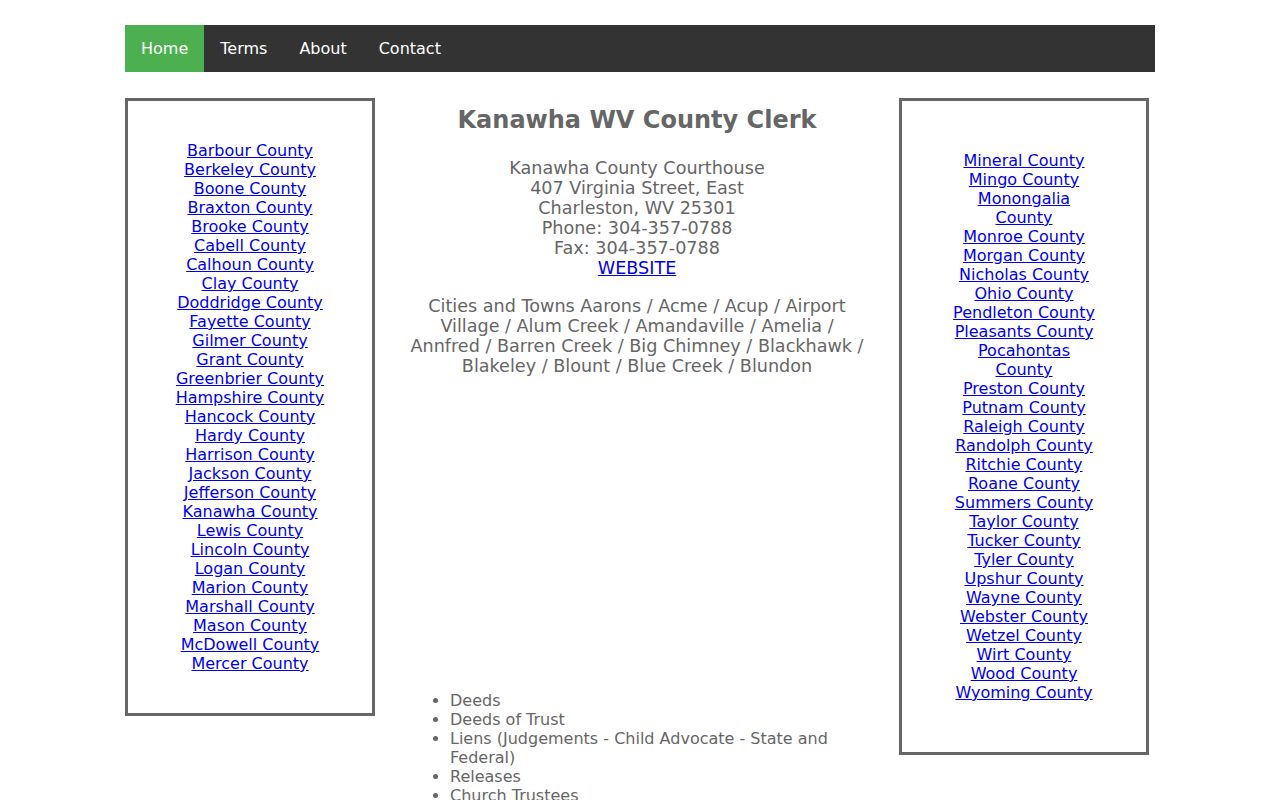
Let the instrument categories guide your next search path. Then confirm each index entry against the recorded document itself.
Walk Back the Kanawha Deed Chain
A grantor conveys an interest. A grantee receives it. The chain of title is the full sequence of conveyances and related records. It ties present ownership to earlier transfers. A grantee index helps you find an instrument coming into a named party. A grantor or reverse index helps you find one going out. Kanawha's live landing page does not display its search fields publicly. Ask the record room how its deed index is organized.
- Get the current assessor card and copy the owner, legal description and deed book/page.
- Find the newest deed and record its date, grantor, grantee and instrument reference.
- Search the grantee index for the latest grantor to find how that party acquired the land.
- Repeat with each prior grantor, checking legal descriptions at every step.
- Use estate, court, trust-deed, release and plat records when the next link is not a simple deed.
The Kanawha County Clerk land-record page is the portal starting point. Its public text confirms no online cutoff, image availability, account rules, or copy charge. Never assume the online index reaches back to a particular year.
How Far Kanawha Ownership Reaches
Archives finding aids list separate Kanawha deed runs covering 1757 to 1901 and 1790 to 1910. A deed index runs from 1756 to 1969. Another series holds a grantor index from 1790 to 1946. It also holds a grantee index from 1795 to 1967. These ranges belong to distinct microfilm series. None of them should be read as blanket coverage for every book.
The West Virginia Archives finding aid lists the Kanawha deed and party-index series described here.
The Clerk's public landing page states no online starting year. So an empty search result can mean several things. The year may fall outside the live index. The name may be spelled differently, or a different instrument type may have been filed. The reference may also sit in a separate series. Ask for the exact roll, year, and index type instead of simply requesting old deeds.
The County Clerk's public page does not publish an online cutoff. State Archives finding aids list older Kanawha deeds and indexes across separate year ranges.
For recorded dates and the separate finding-aid series, consult the West Virginia Archives Kanawha finding aid, whose index page displays the Kanawha entries.
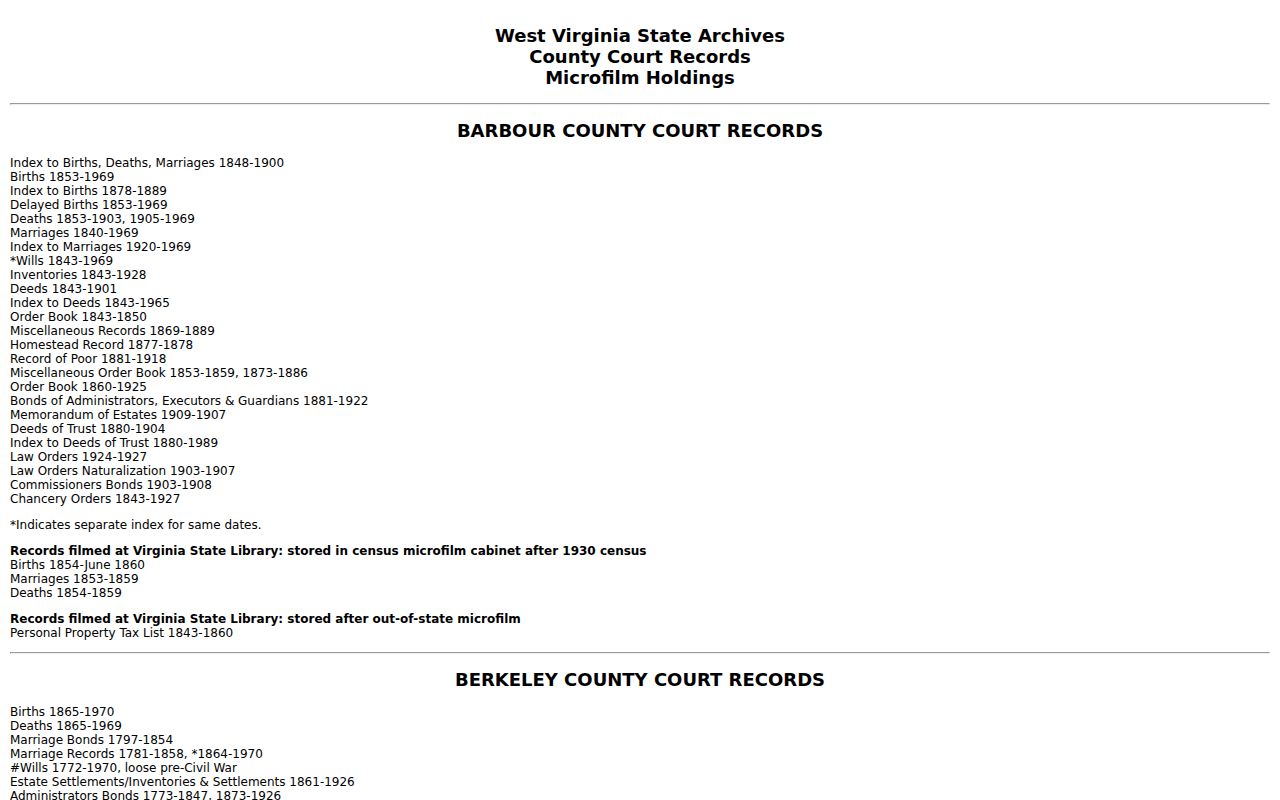
The State Archives finding aid also lists trust deeds, releases, surveys, entry books, leases, homestead records, delinquent land, and wills. It is a guide to series and dates. It does not guarantee every volume survives.
Tax Books and Prior Owners
Kanawha's Assessor Land Book Viewer separately advertises land books from 1791 through 1962. Its search fields are year, book or district, and page. A land book shows a name or tax description at a point in time. It is not the recorded deed. It can help identify an owner before modern parcel numbers existed. It can also tie a tract to a district.
Earlier tax materials in the Archives include delinquent land books from 1868 to 1926. They also include delinquent land sales from 1867 to 1925. Those records can explain a change in tax status or a later sale. A delinquent entry alone does not prove a tax deed issued. Search for the later instrument in the Clerk record. Check any Auditor record the statutory process requires.
Keep land-book years and pages separate from deed book and page references. Similar labels describe different record systems.
Estate Links in Kanawha History
A chain of title does not always pass from one deed straight to the next. Death can interrupt it. The transfer may instead come through a will or a fiduciary deed. It may be an executor deed, an administrator deed, or a court order. An heirship affidavit, a survivorship instrument, or a probate sale can also convey the parcel. Search the Circuit Clerk under both the decedent and the estate. Then check the County Clerk land index for the instrument that actually conveys the parcel.
A death certificate marks a vital event. But the probate order or the recorded deed supplies the property authority. Certified vital copies carry a twelve-dollar fee. Identity rules apply, and marriage records fall under a separate confidentiality rule. Ask West Virginia Vital Registration about access. Use the Circuit Clerk file to trace who held power to convey the land.
Watch the tax roll timing. The assessment card may still show a decedent or estate name. That holds until the clerk's transfer is reported and the Assessor processes the roll. The lag is a timing clue, not proof of a missing successor. Compare the parcel description and the legal instrument before assigning ownership.
Deeds of Trust in the Chain
Not every instrument carrying a prior owner's name conveys the parcel. An old deed of trust, assignment, or release may list that person as borrower, lender, or trustee. It may also name them as party to an encumbrance instead of as a grantee. These property records still matter for the chain. The Kanawha County index lists deeds of trust, releases, and assignments. Archives holds historic trust-deed and release series.
When an old deed of trust surfaces, hunt for its release or a later assignment. A release should be tied to the correct instrument and parcel. An assignment can shift who holds the interest. A foreclosure may add a trustee report of sale and a court record. It may also add a later deed. Never treat an instrument's caption alone as a completed transfer.
- Grantor
- The conveying party named in an instrument.
- Grantee
- The party receiving the interest described.
- Reverse index
- A party index used to follow transfers out of a named person.
- Quitclaim
- A deed conveying the grantor's stated interest without a warranty of title.
- Warranty deed
- A deed that includes stated promises about title, as written in the instrument.
Historic Kanawha Land Descriptions
Older Kanawha County property records rarely describe land by numbered street. A tract may instead be defined by survey, waterway, adjoining owner, or metes and bounds. Archives lists Kanawha survey books from 1788 to 1861. It also holds early entry books, alongside deeds from the Virginia era and statehood period. A modern GIS parcel ID will not appear in those pages.
Transcribe the whole description. Keep every direction, distance, corner, stream, and adjoining tract. Compare that wording against a later deed and the recorded plat. Then bridge to the present with the assessor's legal description and map card. Treat the old description as its own source. A visual match on the GIS map does not settle a title question.
Urban lots follow a different pattern. They are usually described by subdivision, lot, and block. A street name or number may have changed. The plat and party index can then serve better than an address search.
Directories and Former Occupants
Polk's Charleston City Directories cover Charleston and its neighboring suburbs from 1908 to the present. A single entry may yield a name, a spouse or household notation, an employer, and a street address. Some entries add an owner, renter, or widow marker. Each volume has its own abbreviation key. Note the year and page, and keep residence entries apart from business listings.
A directory can tie a historic address to an occupant. It can also link that address to a name in a deed. It does not show legal ownership. Street renumbering, annexation, apartment changes, and a rented address can all explain a mismatch. The entry may diverge from the deed description. Pair the directory with newspaper notices, obituaries, or probate papers. Then confirm the transfer in the Clerk's records.
The local library's history page describes the directory and newspaper collections. Some resources require library access.
When a Kanawha Index Link Is Missing
A missing deed hit does not mean a gap in ownership. Check name variants, initials, estate names, corporate names, fiduciary titles, and land descriptions. Search both the grantee and grantor sides of the index. Then review related plats, court orders, releases, and trustee reports. The year may fall outside the public web index. In that case, ask the record room or Archives for the relevant book and roll.
The State Archives handles only written research requests. Include up to two focused questions. Add the county, full names, an approximate date, and the record type. The services page lists separate research and copy charges. The statewide deed preservation project lists Kanawha as in progress. Digitization status may change while the microfilm series remains.
For a single current instrument or certified copy, the Kanawha deed records page covers the Clerk route. For earlier owners, keep a dated table of each instrument. Stop when the legal description no longer matches the parcel.